
Recipes
I wrote a cookbook titled Persian Delicacies to honor my mother, my late grandmothers, and other family members and friends who generously shared their signature recipes with me.
Persian Delicacies supports the movement toward eating nourishing, whole and unprocessed foods.
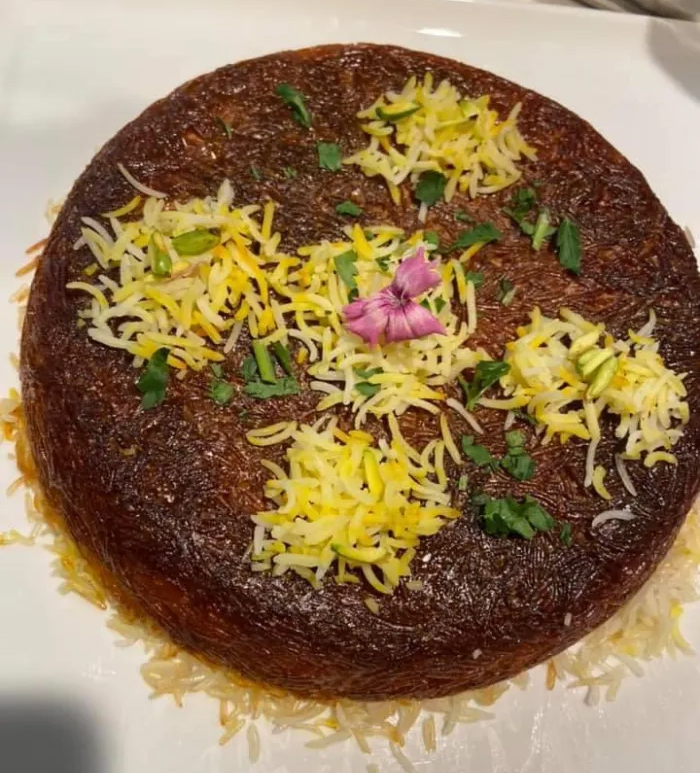
Persian Rice
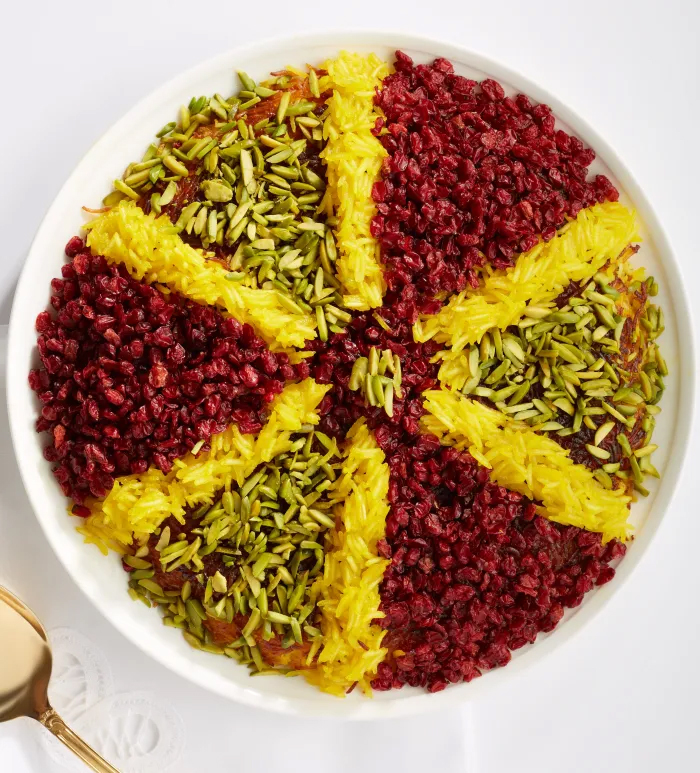
Rice with Barberries (Zereshk Polo)
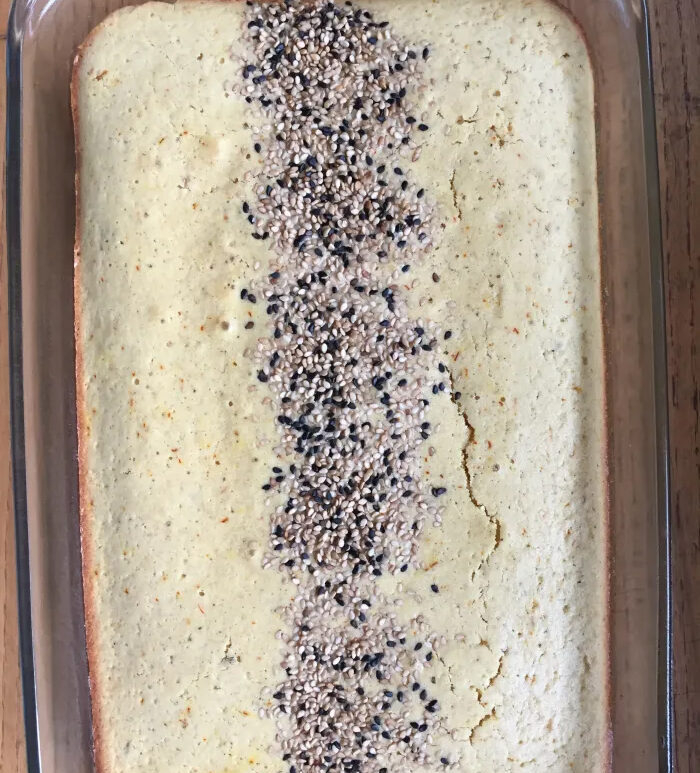
Gluten-free Shirmal Bread
Persian Rice
Rice is the most widely consumed staple food in Asia. It is an integral component of Persian cuisine. Grains of rice are said to symbolize money in Persian culture. I will always love rice for the comfort food that it is.
Long-grain Persian rice, also known as Chelo or Berenj, is different from Jasmine rice or sticky rice since the water is drained after cooking (parboiling). It is then cooked with oil and turmeric powder and saffron for about half an hour. This simple recipe is the basis for all other complex rice dishes.
Brown rice can also be made this way. However, extend boiling time to forty minutes prior to draining brown rice.
My grandmothers would soak the rice in water overnight, but with the quality of today’s rice it’s no longer necessary. I must confess that I still soak the rice for a couple of hours prior to cooking in order to soften the rice and get rid of any residues.
Tahdig (burnt rice) in my family is the best part of the rice. I’ll never forget when an American guest said in a horrified voice: “Oh no, the rice is burnt!” I had to explain to her that Tahdig is a Persian delicacy and that we burn the bottom of the rice on purpose. It soon became her favorite too. My mother served rice during the time she made a Thanksgiving feast. It’s safe to say that rice dishes figure prominently in Persian dinner parties.
Ingredients:
- 2 cups basmati rice
- 4 cups water
- 1 Tablespoon salt
- ½ teaspoon turmeric powder
- ½ teaspoon saffron powder (if available) plus ½ cup boiling water
- 4 Tablespoons oil
- 1 small potato, sliced in 1 inch rounds (optional – for Tahdig)
Directions:
- In a large pot (preferably a rice pot with a hole on top for the steam to escape) bring 4 cups of water to a boil. Add rice and salt as desired and boil until the rice has become soft (not too soft – about 10 to 15 minutes).
- Drain excess water in a colander.
- Pour vegetable oil and turmeric and saffron on the bottom of the same pot. At this point you can place sliced russet potatoes at the bottom of the pan to make Tahdig or the rice on the bottom will become rice Tahdig after about 20 to 25 minutes of cooking.
Add the drained rice. You can pour more vegetable oil for a silkier consistency. Cover pot and cook for 25 minutes. Use a dish towel under the cover if you don’t have a rice pot.
Serves 4
Saffron Garnish
Saffron is said to be the most expensive spice in the world. In my opinion it’s worth every cent since it adds a vibrant yellowish-orange color, an exotic aroma and a unique depth of flavor to the recipes. Saffron is a rich plant source riboflavin (vitamin B2), stimulates digestion and has anti-depressant and anti-cancer properties.
I use a saffron garnish on the rice whenever I have guests to beautify and design the rice.
My mother likes to grind saffron strands until it becomes a powder. It’s easier to dissolve in water this way. But I confess that I usually skip this step. The good news is that liquid saffron and ground saffron are now available in Persian markets. Here is a recipe if you can’t find it though.
Ingredients:
- A pinch of saffron powder
- ¼ cup hot water (or 3 to 4 ice cubes)
Add hot water to the saffron and stir. Pour over the prepared rice in a serving dish and be creative with your design.
Alternately, you can make saffron garnish with ice cubes and saffron stands or saffron powder.
Rice with Barberries (Zereshk Polo)
The sweet and sour Zereshk (Barberry) is a rich source of calcium and iron and is said to reduce blood pressure and cholesterol.
Ingredients:
- 1 cup barberries (zershk), soaked in 1 cup cold water
- 2 tablespoons olive oil or avocado oil, plus 3 tablespoons
- 1 small onion, minced
- 1 teaspoon sugar
- Saffron garnish
- 2 cups rice soaked in salted water for two hours
- 4 cups water
- 1 teaspoon salt
- 1 teaspoon turmeric powder
Directions:
- Wash the barberries in warm water and drain.
- In a skillet or saucepan cook the barberries in oil on medium heat.
- Add the onion, sugar and saffron garnish. Mix and cook for 10 minutes. Set aside.
- In a large pot bring 4 cups of water to a boil. Add rice and 1 teaspoon of salt and boil in the uncovered pot until the rice has become al dente’ (not too soft – about 10 minutes).
- Drain the rice.
- In a rice pot add 3 tablespoons oil and turmeric. Alternately add the drained rice and the barberry mixture. Cover the pot with a dish towel, wrapping the towel over the lid (this will absorb extra steam) and cook for 20 to 25 minutes.
Serve warm as a side dish or with chicken as a main dish.
Shirmal Bread
My aunt Jacqueline generously shared her recipe with me. Shirmal bread (Noon Shirmal) can be used in conjunction with Sarsheer for breakfast. She makes Shirmal for special occasions.
Cut the recipe ingredients in half for a smaller portion.
Ingredients:
- 5 cups flour
- 2 cups sugar
- 6 eggs
- 1 cup butter, melted
- 1 tablespoon baking powder
- 1 tablespoon ground cinnamon
- 1 tablespoon ground cardamom
- 1 tablespoon ground ginger
- ¾ cup milk
- 2 Tablespoons sour cream or yogurt
- 2 packets of yeast
- 1 cup warm water
- 1 teaspoon saffron strands
- 1 Tablespoon black or white sesame seeds (optional)
Directions:
- Preheat oven to 350 degrees.
- Activate the yeast in warm water. Set aside for ten minutes.
- Cream sugar and butter. Add the flour and the other dry ingredients and mix well by hand or with an electric mixer. Incorporate the eggs.
- Add the activated yeast to the milk and cream. Add to the flour mixture and mix well.
- Transfer to a greased rectangular Pyrex dish. Brush with egg wash and sesame seeds if desired.
- Bake for 15 to 20 minutes until golden brown. Bake for 30 minutes for a crispier Shirmal.
Serve warm with cheese, jams or as a dessert.